They Asked If It Was a Robot. Then They Booked.
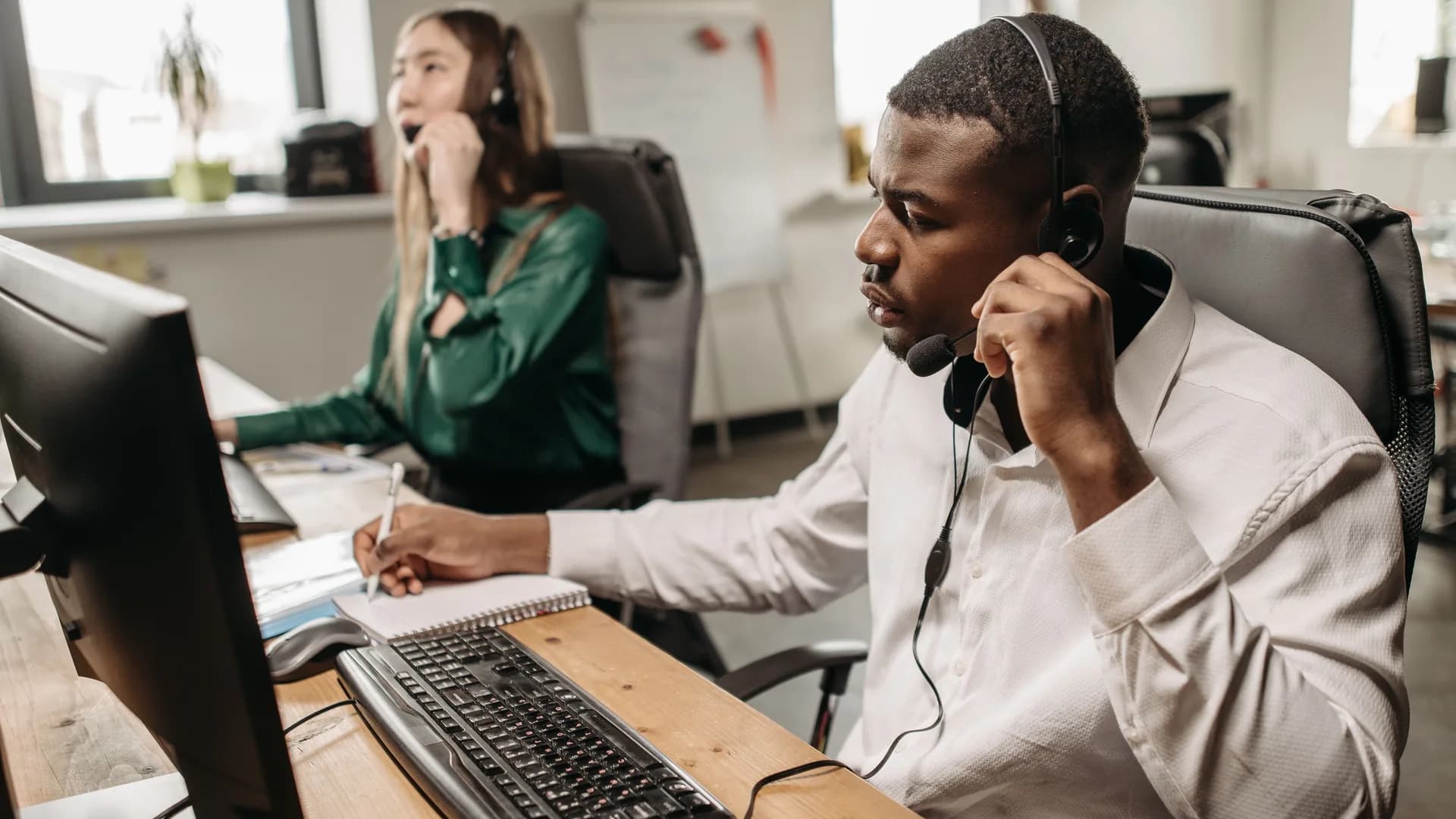
Callers keep asking the question everyone in this industry is still arguing about. "Are you a robot?"
The people who ask it still book. In a year of real call data, 21.9% of callers who asked "are you a robot?" became a lead or a booking anyway. Only one in sixty callers even asks.
Your phone is the leak
Up to 62% of inbound calls to small businesses go unanswered during their busiest hours. Not because nobody is at the desk. Because the desk is also the warehouse, the truck, and the job site.
It's worse than it looks, because of when the calls land. 28.5% of calls to a small business arrive outside normal hours. A third of those after-hours callers, 34.8%, are calling to buy.
Over half your inbound calls, 51.2%, are real leads. The rest are spam, wrong numbers, and the pizza place. The real ones don't leave voicemails. They dial the next number.
Over half of callers, 51.5%, are signaling they need help right now. Their words are today, as soon as possible, emergency. A voicemail box does not do now.
And 37.1% of callers have called you before. Sending a returning customer to voicemail does not lose a lead. It erodes a relationship.
Do you answer unknown numbers?
After hours is when money calls
Everyone assumes the 9pm caller is a tire-kicker. The data says the opposite. After-hours calls turned into a lead or a booking 23.6% of the time. During business hours, 18.6%.
The calls you're least equipped to take are the ones most likely to become money. 17.2% of all leads and bookings arrive after hours. Roughly one in six of them lands with the lights off.
And the buyers won't wait for you to open. 79% of consumers switch to a competitor that responds faster. 75% have hung up rather than sit on hold. You can't out-personality a hangup.
Customers have been trained to expect this. 74% now expect a business to be reachable around the clock, because the software made it possible.
Only 8.2% of calls are outright spam. The rest are real people. You are not filtering out noise. You are just not answering.
The robot argument is settled
For two years the industry has fought over whether software should be allowed to answer a business phone. Customers hate the idea of a machine answering, goes the argument. It feels cold and fake, and the sentiment surveys mostly agree.
I read the report those numbers came from, built on 1.4 million real calls, and I reread the robot line twice because I did not believe it. In Blade Runner, a machine called a Voight-Kampff asks a long series of questions to catch a replicant. Forty years later the test runs in reverse. Your caller asks the machine one question, and then books anyway.
Nobody argues a fake human beats a real one. That's a strawman. The choice in 2026 isn't human versus robot. It's answered versus ignored.
The adoption numbers show which way it's going. AI voice agents handled 4.0 of every 10,000 calls in September 2026, up from 0.7 in late 2025. The market grows 39% a year toward $35 billion. The beachhead isn't cold-calling. It's answering.
The math made it inevitable. A software agent answers for about eight cents a minute. A human-handled call averages $7.16. The receptionist was not fired. She got an understudy who works nights for free.
And the callers are fine with it. 99.0% of callers left the conversation neutral or positive.
What actually matters
Strip it down and only three things decide whether a call becomes a customer.
- Something answers. Every time, including 9:40 on a Saturday night.
- It knows a price, or a real range, without saying "it depends."
- It offers a slot and books it, instead of promising a callback that never comes.
Notice what's missing. Nothing about being warmer or more human. Those still matter to the people on the other end. They're worth exactly zero to the caller who got your voicemail and dialed your competitor.
The takeaway
Stop worrying about whether it is weird that a machine answers your phone. Start worrying about the 62% of calls nobody answers.
The robot question your caller almost never asks has a one-word answer.
Booked.
Sources: NextPhone 2026 AI Receptionist Call Report and 2025 call analysis (1,446,980 calls across 2,074 businesses; 21.9% 'are you a robot?' booking rate, 1-in-60 ask rate, 23.6% vs 18.6% after-hours vs business-hours booking rate, 17.2% after-hours share, 28.5% after-hours call volume, 34.8% after-hours buying intent, 51.2% real-lead share, 51.5% urgency signal, 37.1% repeat callers, 8.2% spam share, 99.0% neutral-or-positive sentiment, 4.0 vs 0.7 AI calls per 10,000); Aircall 2026 AI voice agent buyer's guide (62% of inbound SMB calls unanswered at peak hours); CloudTalk 2026 AI voice agent statistics citing Grand View Research ($2.54B to $35.24B market, 39% CAGR, 52.1% inbound share), Zendesk CX Trends 2026 (74% expect 24/7 service), ElevenLabs and ContactBabel ($0.08/min software vs $7.16 human-handled call), and Invoca's 2026 B2C Buyer Experience Report (79% switch to a faster responder, 75% hang up on hold).

25 years in tech. Serial entrepreneur. Writes about what actually works in sales and lead management.
Put your pipeline on Autopilot
Talk with our team. See how SalesPartner handles your leads.
Book Intro Call